Climate change is a priority at Pioneer, and we strive to reduce emissions of methane and other greenhouse gases from our operations, while assessing and managing the impacts of climate change on our business.
Pioneer recognizes the goals of the Paris Agreement to limit a global temperature increase to well below 2 degrees Celsius and pursue efforts to limit it to 1.5 degrees Celsius. Climate change is a priority at Pioneer, and we strive to reduce emissions of methane and other greenhouse gases from our operations, while assessing and managing the impacts of climate change on our business. Our actions support the aims of the Paris Agreement to reduce emissions and our goal to produce low-cost, low-emission oil and gas.
Pioneer also limits emissions of non-GHG emissions from our operations, including volatile organic compounds (VOC), nitrogen oxides (NOx), sulfur dioxide (SO2) and other pollutants. These emissions are subject to Texas air permitting programs that are intended to protect regional air quality near oil and gas operations. We utilize best practices and take a holistic approach to reducing emissions. Our emissions practices not only aim to ensure regulatory compliance but also deliver emission reductions well beyond what is required by federal and state regulations.
We believe our strategy, capital discipline, operational excellence and best-in-class assets positively position Pioneer to meet these challenges. We are committed to working with all stakeholders to address our impacts on the environment, while providing a sustainable supply of abundant, affordable and responsibly produced energy.
Our Net Zero Pathway and Interim Emissions Targets
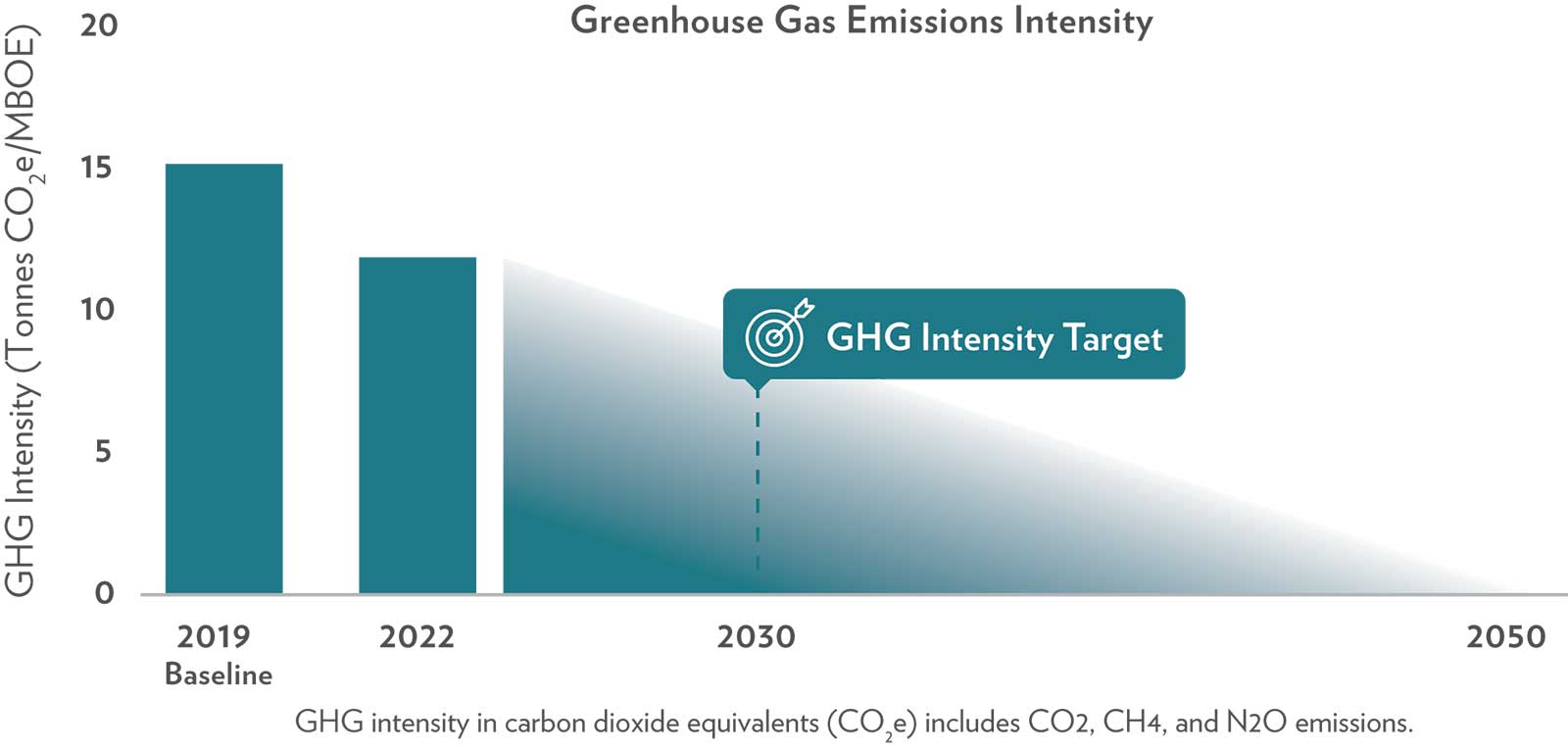
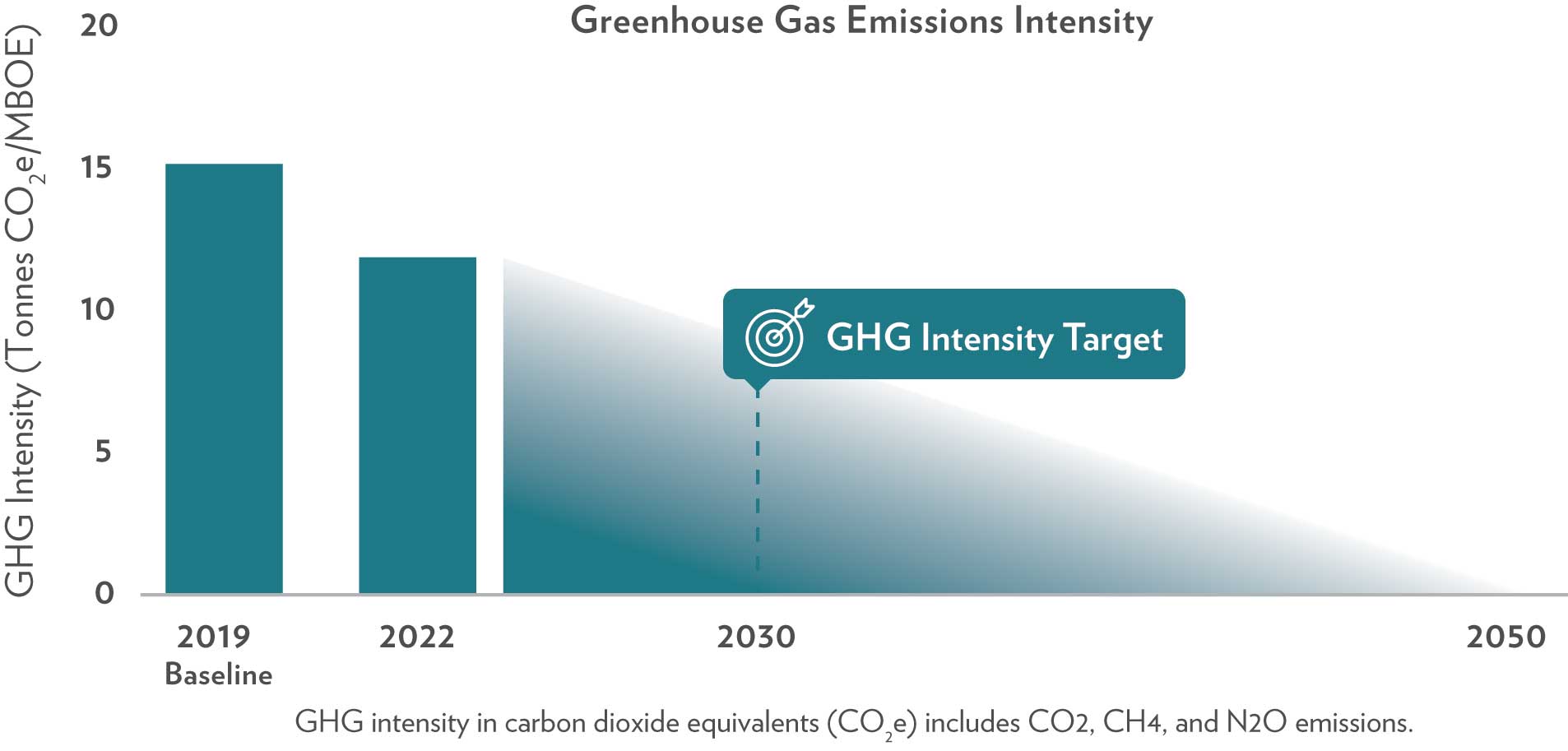
Pioneer set targets to reduce our Scope 1 and Scope 2 GHG emissions intensity by 50% and our methane emissions intensity by 75% by 2030, which, once achieved, would align with Pioneer’s planned path to achieve net zero GHG emissions by 2050. Our 2030 targets are based on current development plans. In 2023, we further demonstrated ourncommitment to emissions reduction by setting an additional short-term target to achieve a measurement-informed methane intensity of 0.20% or less in 2025.
We fully understand that we operate in a dynamic environment, and we will continue to review and revise our emission-reduction plans accordingly. We are proactive in communicating and planning with third parties, especially where externalities, such as materials availability, equipment supply, technology development, changed regulations, and gas-gathering and power infrastructure can affect our progress.
Pioneer’s overall strategy to manage GHG emissions comprises the following actions:
- Reduce methane emissions through facility design, field operations and leak management
- Eliminate routine flaring and minimize flaring in emergency, upset or maintenance circumstances
- Minimize emissions through electrification of field operations
- Secure purchase power agreements (PPAs) for renewable energy and associated renewable energy certificates (RECs)
This strategy underpins our vision for both reducing existing emissions and curtailing growth of potential future emissions over the next eight years and beyond. The impact of these cumulative actions will not only significantly decrease our baseline emissions forecasted for 2030, but also align with our trajectory towards net zero Scope 1 and Scope 2 emissions by 2050.
Pioneer’s primary objective is to manage emissions from our own operations. We do not intend to rely on carbon offsets to meet our emissions targets in the near term. However, Pioneer is investigating carbon-reduction technologies and nature-based solutions that may play a role in helping us neutralize residual Scope 1 GHG emissions and realize our net zero ambition in the longer term. In addition, Pioneer anticipates securing field-supported (bundled) RECs to help minimize our Scope 2 GHG emissions.
Interim Emissions-intensity Targets
To support our Scope 1 and Scope 2 net zero ambition and drive incremental progress, we have established targets to:
- Reduce our Scope 1 and Scope 2 GHG emissions intensity 50% by 2030 from our 2019 baseline
- Reduce our methane emissions intensity 75% by 2030 from our 2019 baseline
This year, as part of our OGMP2.0 commitment, we established a short-term, measurement-informed methane emissions intensity target to:
- Reduce our methane emissions intensity to ≤0.20% of produced natural gas in 2025
Methodology
These targets represent emission reductions from our operated assets from a full-year 2019 emissions baseline, where applicable. Quantifying and reporting our emissions on an intensity basis is the best way to demonstrate progress and accountability in the near term given the dynamic nature of upstream oil and gas assets. Pioneer will report our performance progress against these targets annually, consistent with our reporting principles.
- GHG emissions intensity performance will be based on Scope 1 and Scope 2 GHG emissions divided by gross oil and gas production in terms of tonnes CO2e divided by MBOE (emission in tonnes CO2e/MBOE)
- Methane emissions intensity performance will be based on methane emissions in terms of CO2e divided by gross oil and gas production (emissions in tonnes CO2e/MBOE)
- Measurement-informed methane emissions intensity performance will be based on methane emissions in terms of Mcf divided by gross gas production (emissions in Mcf/Gross gas production Mcf)
Our Net Zero Pathway and Interim Emissions Targets
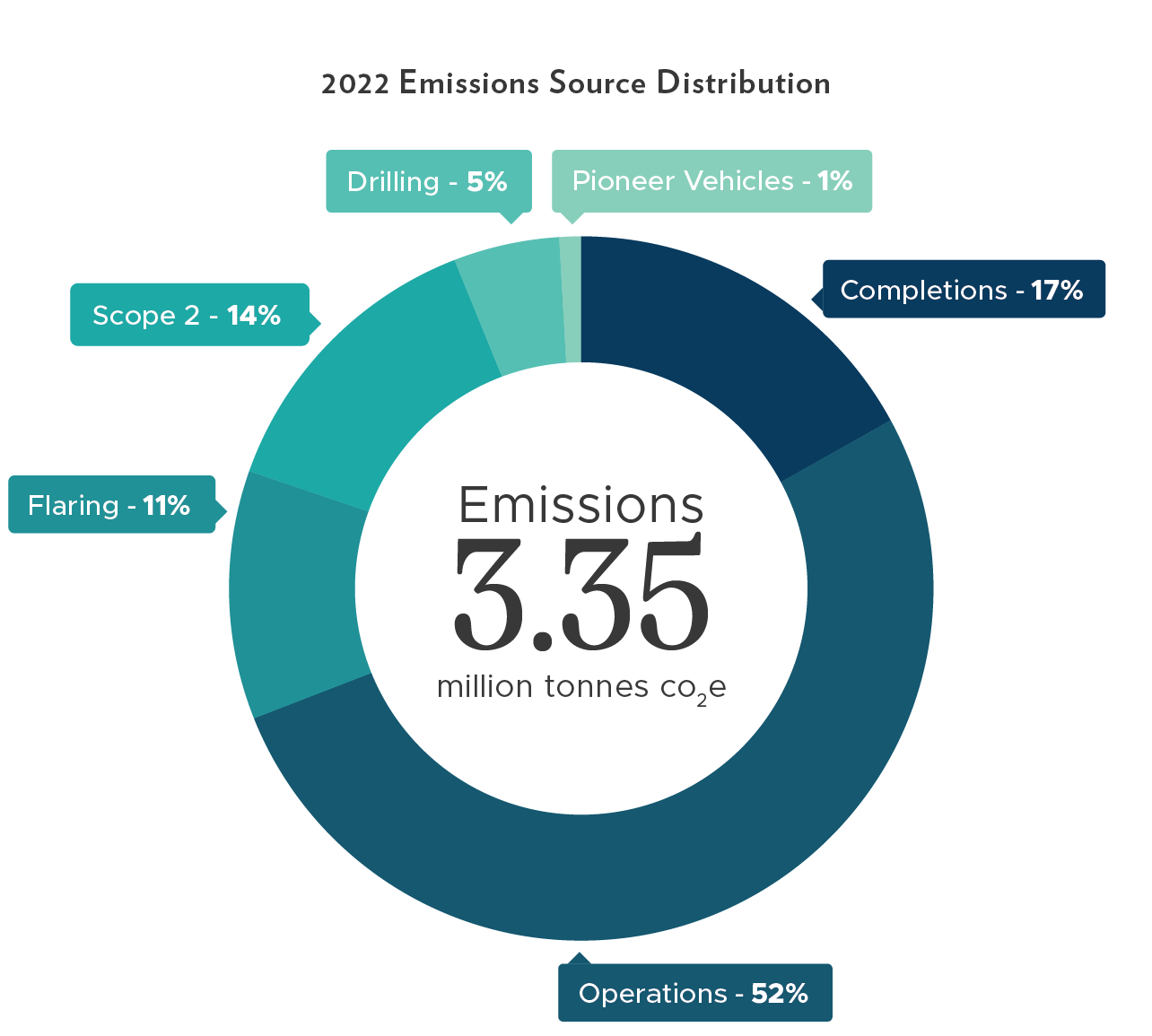
Pioneer’s methane emissions intensity in 2022 decreased from 2021 levels, while total GHG emissions intensity remained constant. We worked diligently to manage our activity, while bringing acquired assets in line with our operational standards by adding vapor recovery units, converting pneumatic controllers to instrument air and other modifications. Focusing on methane emission reductions in the near term enables us to make progress on our targets, while allowing time to address the more complex task of reducing CO2 emissions through field electrification. In 2022, we are reporting a:
- 64% reduction in methane emissions intensity from our 2019 baseline
- 22% reduction in Scope 1 and Scope 2 GHG emissions intensity from our 2019 baseline
Flaring Reduction Targets
Pioneer also established two targets specific to production flaring:
- Limit our annual flaring intensity to less than 1% of our natural gas produced
- Zero routine flaring by 2025, five years earlier than our original 2021 commitment of zero routine flaring by 2030
Methodology
Flaring intensity performance will be based on natural gas volumes flared during production operations (in MCF) divided by gross natural gas production in MCF.
Year over year, Pioneer has maintained low levels of flaring, even while integrating two newly acquired assets into Pioneer’s ongoing operations. In 2022, our annual flaring intensity was 0.54%, which is 46% lower than our 1% threshold commitment and 54% lower than the Permian Basin average of 1.18% reported by Rystad Energy.
Pioneer endorses the World Bank’s Zero Routine Flaring (ZRF) by 2030 Initiative, and we have established processes to identify, quantify and manage routine and non-routine flaring. In 2022, Pioneer reported 0.93 million cubic meters of natural gas routinely flared (approximately 1% of our total flaring) to the World Bank.
Methodologies and Definitions
Detailed information on our emission inventory methodologies, as well as definitions of Scope 1, Scope 2 and other air emissions, are provided in Pioneer’s Methodologies and Definitions.