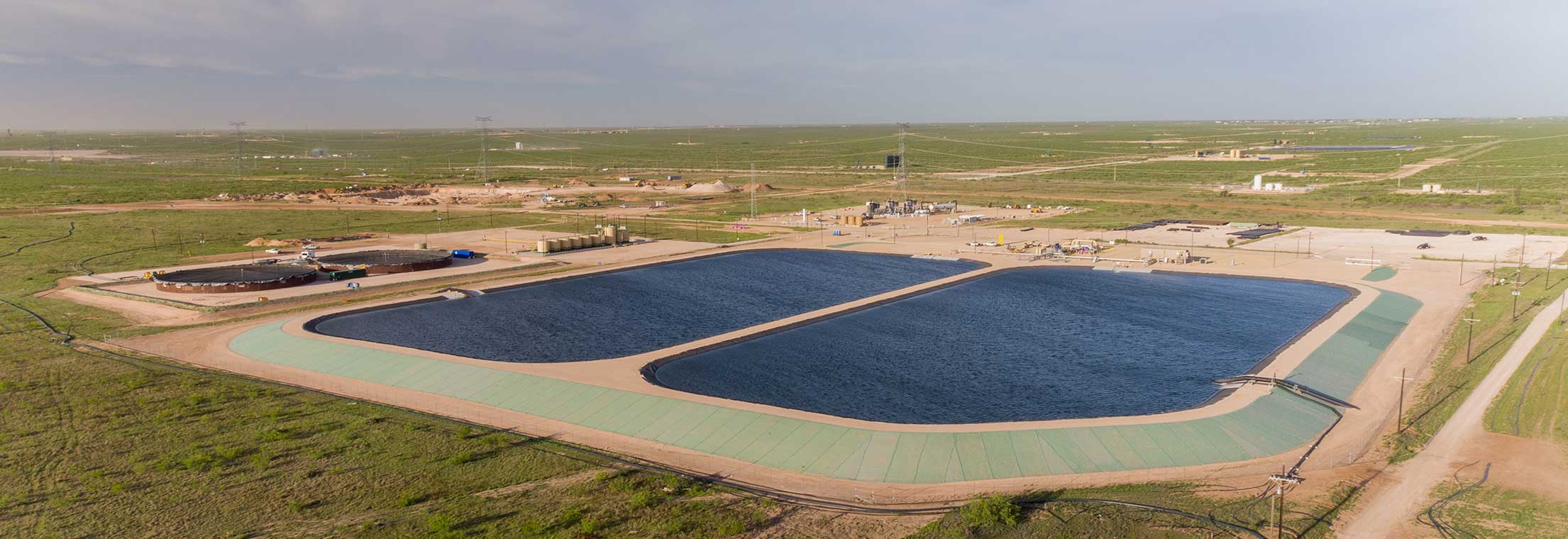
Water is essential to hydrocarbon production, and Pioneer diligently manages our efforts around this critical resource using a team that specializes in responsible water management and strategic approaches to conservancy.
Water: A Pioneer Priority – Responsible sourcing, production and protection
Water is essential to hydrocarbon production, and Pioneer diligently manages our efforts around this critical resource using a team that specializes in responsible water management and strategic approaches to conservancy. Pioneer has a straightforward strategy: “Maximize oil and gas production through responsible management of water sourcing and takeaway that provides flexibility and optionality, while protecting the communities and environments in which we operate.”
There are three main ways that water relates to hydrocarbons.
- Water sourcing is needed to carry out hydraulic fracturing, the process by which water and sand are pumped into a wellbore to enlarge fractures in the rock in order to extract hydrocarbons. Pioneer became the largest oil producer in the state of Texas, supported by our use of both horizontal drilling and hydraulic fracturing to unlock unconventional reservoirs within our extensive Permian Basin acreage position.
- Producing hydrocarbons results in produced water. The produced water, which is separated from the hydrocarbons, requires responsible handling. Formerly limited to disposal, there are now multiple options for responsibly produced water management or “takeaway.”
- The processes of drilling, completing (hydraulic fracturing), and producing oil and gas wells each include steps to protect precious groundwater resources in our areas of operations. Pioneer employs industry-leading water management practices in terms of sourcing and takeaway of water related to hydrocarbon production. By its very nature, responsible water management helps sustain or improve our communities, our environment, our people and our business.
Responsible sourcing is measured with our freshwater reduction target, which is explained further in this section. Water shortages in West Texas, whether due to drought or competition for resources, could significantly affect our operations. Climate change could decrease groundwater availability. Pioneer understands the critical need to carefully manage freshwater use in a world of increasing demand. Freshwater is found in lakes, rivers, wetlands and groundwater aquifers below the surface. Pioneer does not use surface-water resources.
Recycling produced water for use in oil and gas operations, otherwise known as reuse water, is our top priority, because it simultaneously improves both water sourcing and takeaway in a sustainable way. Additionally, Pioneer secures strategic sources of treated municipal (or “reclaimed”) wastewater. Our innovative public-private infrastructure projects with the cities of Midland and Odessa promote preservation of freshwater through our use of reclaimed water in drought-prone West Texas. After produced water reuse and reclaimed municipal water, Pioneer then accesses brackish groundwater wells that are drilled deeper to avoid the shallow groundwater used for drinking and irrigation. Pioneer seeks to expend every effort to avoid using freshwater in hydraulic fracturing, preserving this critical resource for local residential and agricultural use, as well as for drilling operations that require using freshwater in order to protect groundwater.
Responsible takeaway includes expanding our options. While reuse is the top priority, it is not the sole answer, and we actively implement other supplemental strategies. Beyond the additional options for proper disposal and reuse, produced water management has improved through cooperative operations with other companies. These efforts include achieving greater reuse of produced water, monitoring seismicity and mitigating injection concerns, accessing new zones for responsible injection, and, finally, treating produced water to clean water standards that are safe for beneficial reuse outside of oil and gas operations, such as irrigation and industrial cooling. For more information on these topics, see the sections: Managing Produced Water, Produced Water Recycling and Avoiding Seismicity Risks.
The third element of groundwater protection is accomplished by all company operations, including responsible drilling and completions practices, responsible operating practices and spill prevention, and responsible water management. For more information, see the section: Groundwater Protection.