At Pioneer, we are committed to maximizing our use of non-fresh water sources. This shows in our aggressive target to reduce our freshwater usage to 20% or less of total completions operations by the end of 2026. Using treated produced water for hydraulic fracturing is the most effective way to preserve groundwater resources and simultaneously minimize the need for disposal. Therefore, we prioritize this method above others. If we are unable to source treated produced water, whether from our own operations or neighboring operators, we further preserve groundwater by using reclaimed water as our preferred second source. We have access to brackish groundwater wells, and lastly fresh groundwater wells, but minimize their use in sourcing water for hydraulic fracturing. Freshwater is necessary for drilling until surface casing is set, in order to protect groundwater while drilling through it. This is the area of operations where fresh groundwater use is appropriate, and we preserve groundwater resources consistent with this strategy.
We use freshwater in both drilling and completion operations; however, our freshwater usage reduction target is focused on the use of freshwater within our completions operations. We are also actively pursuing methods of reducing freshwater use in drilling operations consistent with regulatory requirements. Additional information on our use of freshwater in drilling is provided in the Groundwater Protection section of this chapter.
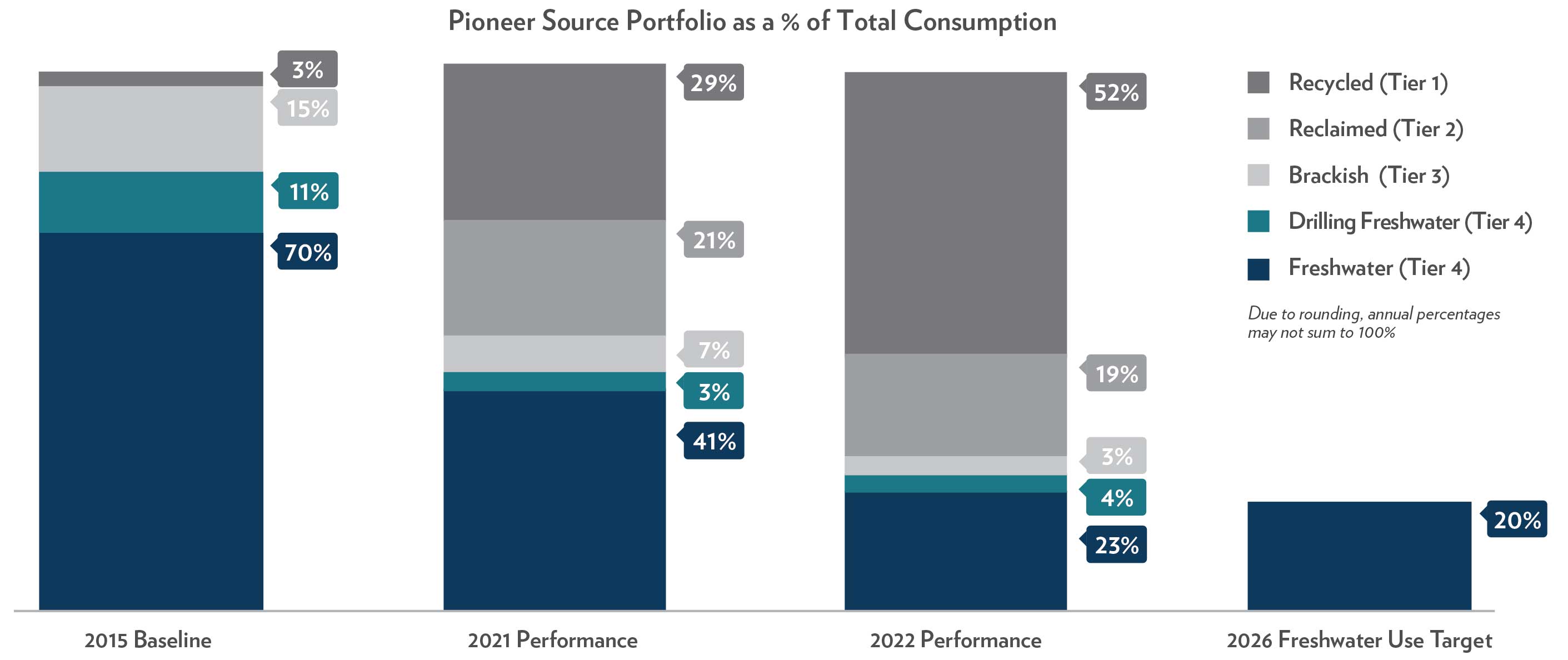
Our freshwater reduction targets are supported by our actions, which include:
- Investing in infrastructure that allows us to better utilize non-freshwater sources, including reuse of treated produced water and reclaimed water from the cities of Midland and Odessa
- Avoiding surface water resources
- Continuously monitoring our production and consumption of groundwater
- Maximizing recycled, reclaimed and non-freshwater resources in our operations
Each type of water is ranked by priority, with Tier 1 representing the highest priority. Our ability to decrease our freshwater sourcing as a percent of total consumption to 23% provides evidence that this strategy is effective and viable. Pioneer has prioritized our water sources using the following tiers:
- Tier 1 – Recycled Water (Most Sustainable)
- Tier 2 – Reclaimed Water
- Tier 3 – Brackish Groundwater
- Tier 4 – Fresh Groundwater (2026 Reduction Target)
- Not Used – Surface Freshwater
While other operators define freshwater as less than 1,000 mg/L total dissolved solids (TDS) or less than 2,000 mg/L TDS, Pioneer defines freshwater using a more stringent standard of less than 3,000 mg/L TDS. While we recognize 1,000 mg/L TDS is sometimes suitable, this limit does not realistically capture how water is used in the Permian Basin.
The primary groundwater aquifers used for residential drinking and agriculture throughout the Permian Basin are often higher than 1,000 mg/L TDS. When it comes to protecting groundwater resources, the Texas Commission on Environmental Quality (TCEQ) defines freshwater as 3,000 mg/L TDS as does the Texas Railroad Commission Groundwater Advisory Unit to define “usable-quality water.” Lower TDS value definitions lack equivalently relevant references, and attempts to cite drinking water standards often leave out that TDS is a voluntary recommendation for municipal providers focused on taste and appearance, not health or usability. While lower TDS makes sense for drinking water taste, it is not an appropriate measure to define where freshwater is sourced, particularly when its use excludes reporting consumption of primary water sources.
Pioneer diligently protects groundwater with required surface casing at the top and bottom of freshwater zones, including the “base of usable-quality water,” which includes water zones containing “generally 3,000 mg/L TDS or less and other waters known to be used or identified as sources of desalinization water.”
Future sustainability disclosure standards could further improve reporting by defining consumption based on shared use of regional drinking and agriculture sources; however, because TDS is historically ingrained in many water definitions and currently used in disclosure standards, reporting based on Texas’ usable groundwater TDS value is more appropriate for Permian operations.
The difference between these definitions of freshwater is significant. When applying the 1,000 mg/L TDS limit, as some of Pioneer’s peers have reported in their sustainability reports, the reported freshwater consumption is greatly reduced. If Pioneer used the less stringent 1,000 mg/L TDS definition, Pioneer’s 2022 freshwater consumption was estimated to be less than ~8%, and this number should be used for comparison to operators using the 1,000 mg/L TDS freshwater limit.
The Importance of Properly Defining Freshwater in the Permian Basin
| Water Quality(TDS mg/L) | Other Common Oil and Gas Water Disclosure Practices | Pioneer Water Disclosure Best Practice | |
| 0 - 1,0000 | Freshwater | Freshwater | Highest-quality freshwater; most usable |
| 1,000 - 3,000 | Brackish | Freshwater | Important for agricultureand desalinization uses in drought-prone and water-stressed areas, particularly over the long-term |
| 3,000 - 10,000 | Brackish | Brackish | Currently uneconomic for agricultural use, requires desalinization |
| 10,000+ | Saline | Saline | |
Some oil and gas operator asset portfolios may also include conventional reservoirs that require the recirculation of large volumes of non- freshwater for EOR projects. Reporting practices that include water used for EOR can add large volumes of water into the normalization factors, positively skewing total freshwater intensity as a percentage of total water use. Since our operations do not utilize these EOR techniques, our reported freshwater use reflects the relevant drilling and completion operations and is only comparable to similar operations. The activities of many other operators with conventional assets will make direct comparisons challenging.
Additional water use metrics are provided in the table above and in our Sustainability Performance Data Table.