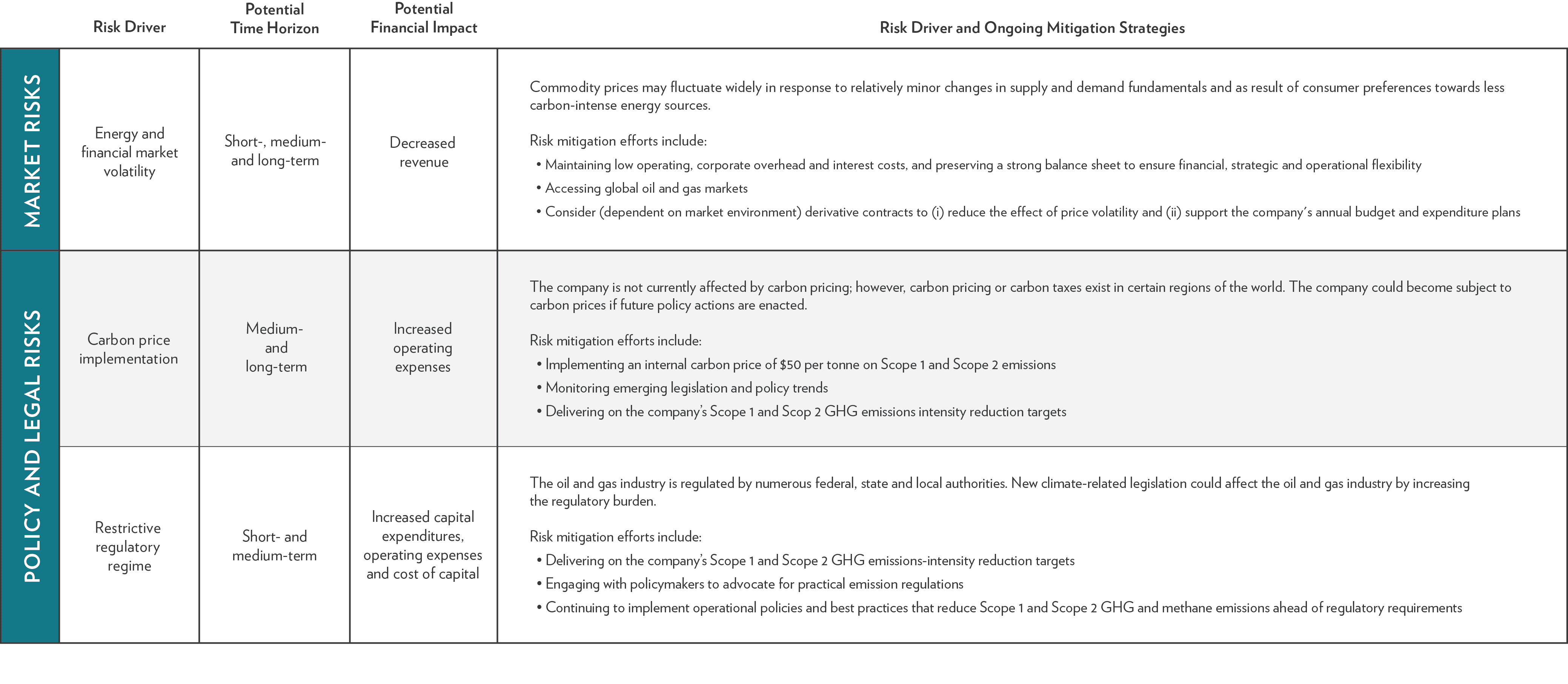
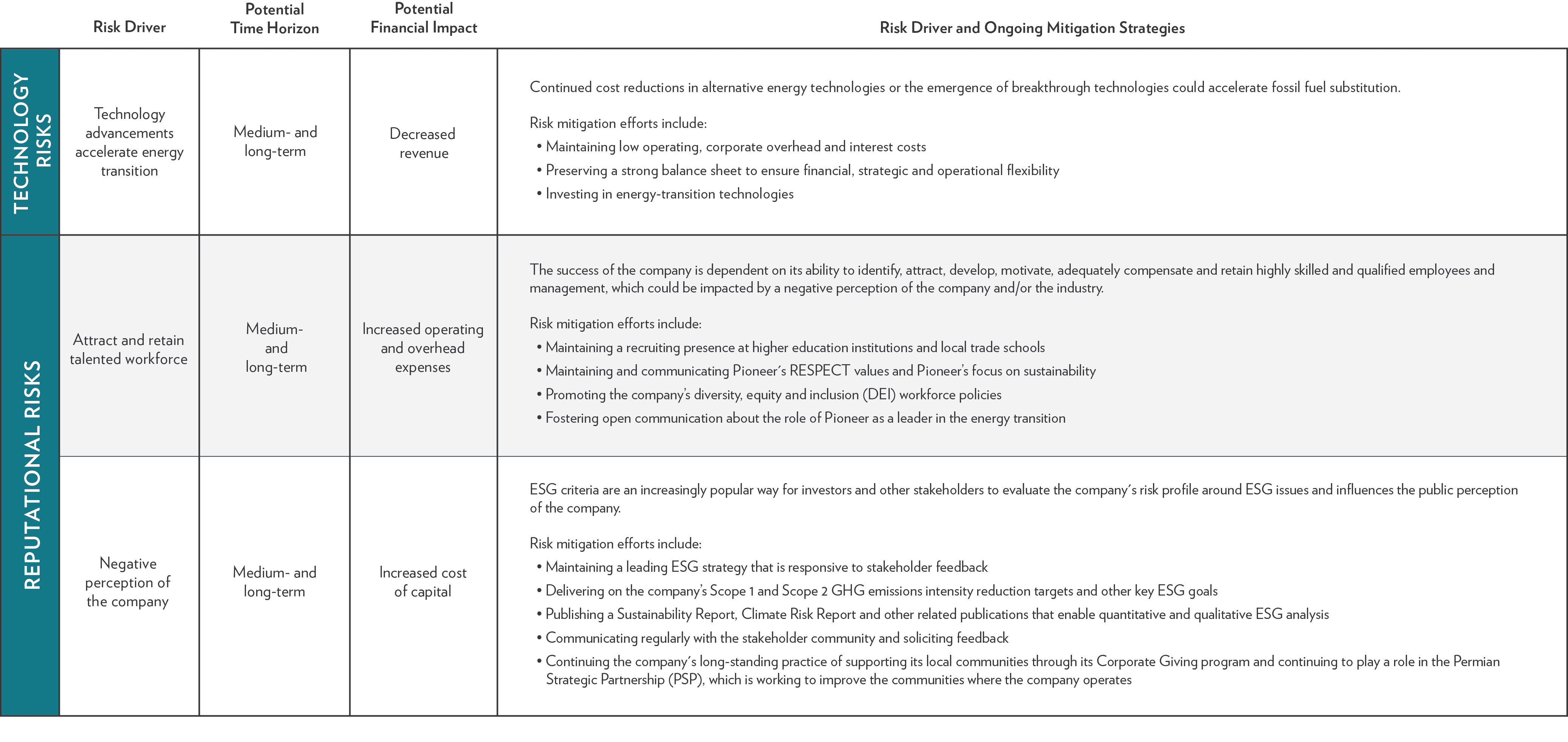
The energy transition will change Pioneer’s operational environment in a variety of ways, with the impact dependent upon the speed and scope with which the transitional elements occur. When considering the climate-related risks, TCFD identifies two categories of climate-related risks: physical and transitional. These risk categories include the potential financial impacts of climate change and are used to assist investors and companies as they evaluate longer-term strategic decisions regarding where and how to most efficiently allocate capital.
Physical Risks
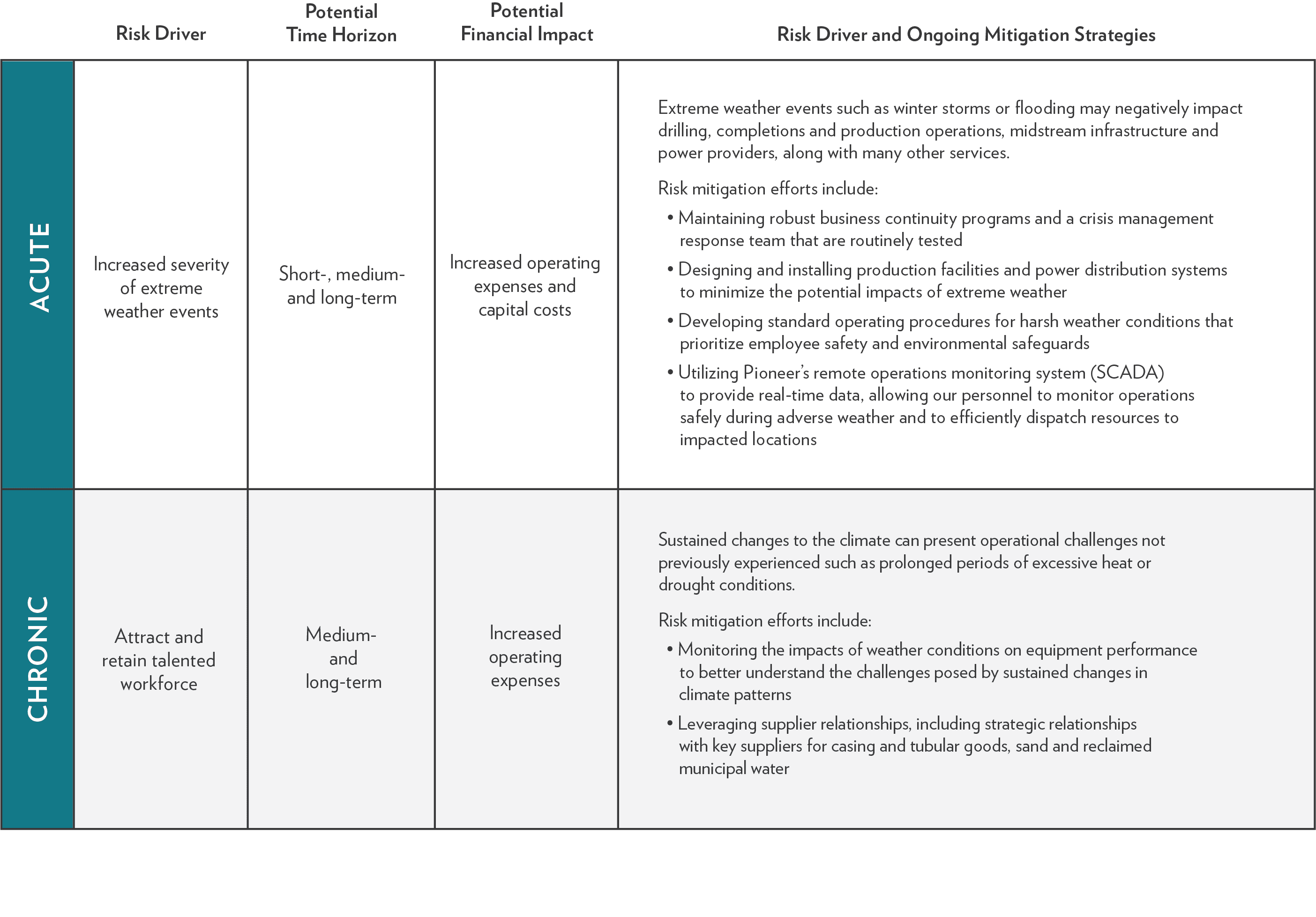
Having operated in the Permian Basin for decades, we have experienced and put measures in place to effectively mitigate most physical risks that affect our assets, including, but not limited to, severe storms or drought. Regularly assessing emergency preparedness and operational resiliency in areas related to equipment design, field staff tools and training, supply chain planning and flexibility, and downstream diversification is integral to mitigating physical risks.
The following table reflects a subset of the climate-related risks identified in the company’s ERM process, specifically those that are believed to have the potential to impact our business.
Physical Risk Assessment
Pioneer has a long history in the Permian Basin, providing significant experience in identifying climate-related physical risks and developing proactive mitigation strategies. Pioneer’s production facilities, gathering and water management infrastructure are planned, designed and operated to withstand the physical operating conditions in the Permian Basin. However, it is important to understand the magnitude of potential future climate-related physical risks on the company’s assets in order to improve our long-term planning. For this reason, Pioneer engaged Jupiter Intelligence™, a leader in physical climate risk analytics, to conduct a baseline physical risk assessment. This effort has increased our awareness of the future physical risks of climate change that could affect our workforce, local communities and assets.
Following TCFD guidance, we utilized three physical risk scenarios (low/intermediate/very high) based on the Shared Socioeconomic Pathways (SSP) that were produced to support the International Panel on Climate Change (IPCC) Sixth Assessment Report, published in 2021. Our physical risk assessment was completed by applying the SSP – 4.5 scenario results to a selection of Pioneer locations in the Permian Basin. Scenario SSP – 4.5 is the intermediate scenario, with emissions peaking in 2040 and then falling through 2100. The physical risk assessment was based on selected locations representing the majority of our daily production at the end of 2022 and was distributed across Pioneer’s total acreage position within the Permian Basin.
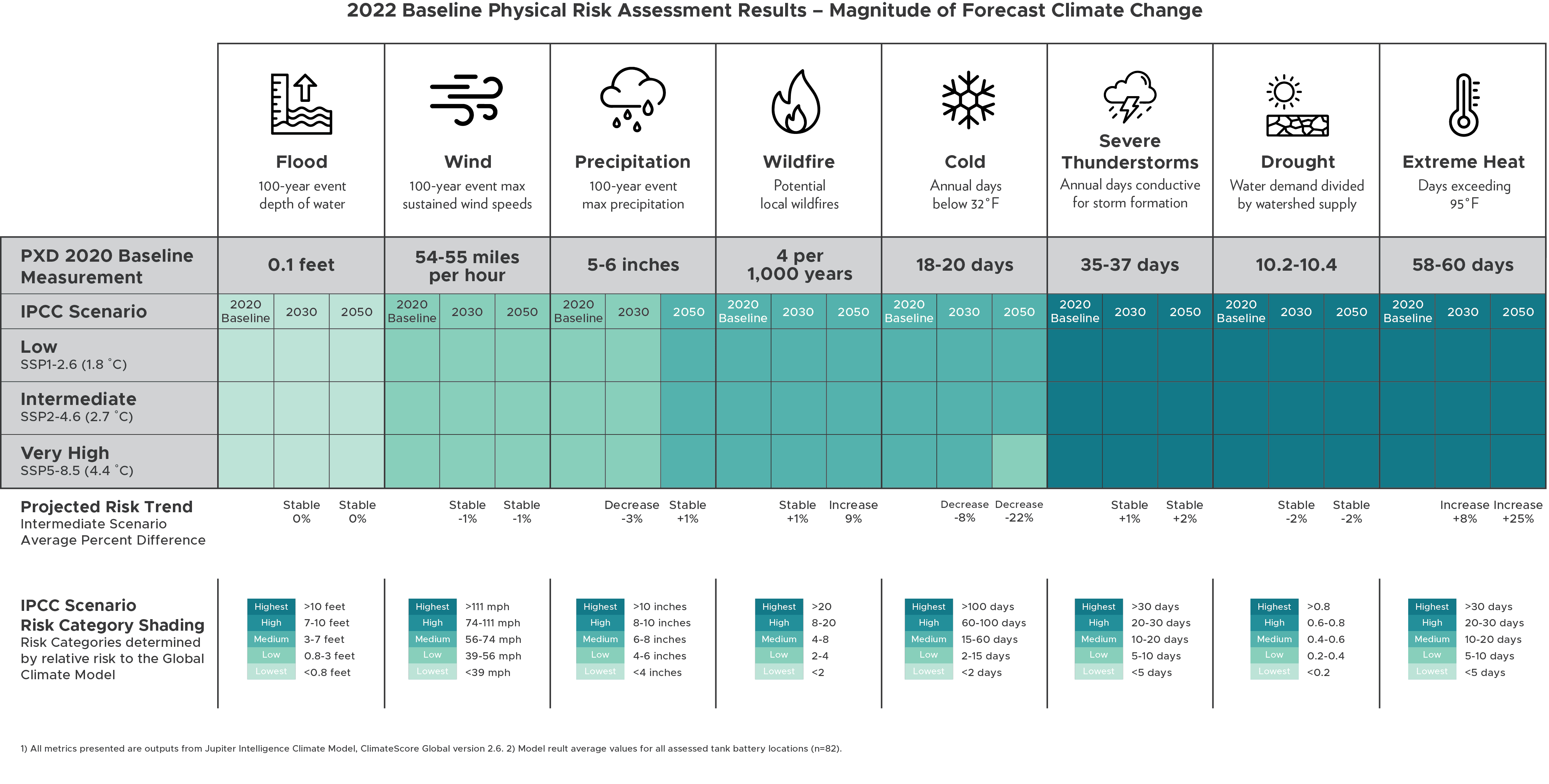
Based on these criteria, Jupiter Intelligence™ modeled five-year periods from 2020 to 2100, which provide Pioneer with more than 7,000 individual climate-related metrics for each location. The scenario results provide a clear picture of the site-specific, physical-climate-related risks that may increase, decrease or remain stable from our 2020 baseline. Pioneer locations appear relatively stable within their risk categories for the long-term, and we do not expect significant shifts in overall risk categorization ranking over the time periods evaluated. The results for extreme heat, drought and severe thunderstorm categories show that Pioneer will need to continue efforts to design and operate our assets with these risks in mind. For example, Pioneer’s progress and commitment to reduce utilization of freshwater in our operations is designed to mitigate the risks associated with potential drought conditions in the Permian Basin. Our production facilities are also designed to withstand extreme thunderstorms. The Jupiter Intelligence™ models also indicate that exposure to extreme cold temperature events in the company’s operating areas is likely to decrease by the end of the decade and continue to decrease significantly by 2050.
The following table presents the results of the 2022 physical risk assessment completed for Pioneer’s assets utilizing the Jupiter Intelligence™ models (as described above). The results illustrate that our physical risk exposure is relatively stable over the long-term.
Transitional Risks
Transitional risks present various challenges when it comes to addressing the mitigation and adaptation requirements related to climate change. These risks have the potential to shift the supply and demand for fossil fuels, due to changes in consumer preferences, regulatory requirements, technology or other areas of impact. As shown in the table below, we evaluate and assess transitional risks on an ongoing basis. Pioneer believes our business and risk management practices reduce the risk of damage to the company over time.